Quick Answer:
Summit County zoning maps show how land is classified and regulated across the county in Ohio. These maps and zoning rules help property owners, buyers, and developers understand permitted land uses, building limits, and development requirements.
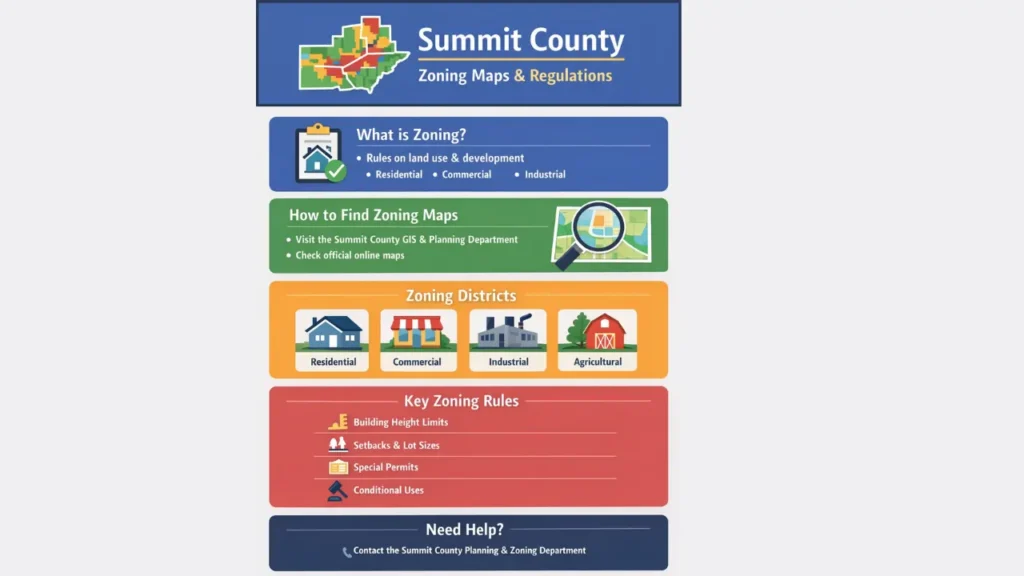
Summit County zoning maps and regulations define how land can be used and developed throughout Summit County, Ohio. These zoning rules affect homeowners, buyers, developers, businesses, and investors by setting limits on land use, building size, and property development.
This guide explains where to find official zoning maps, how zoning classifications work, and how to use zoning regulations for planning and compliance in 2026. Understanding local zoning helps prevent legal issues and supports informed property decisions.
What Is Zoning in Summit County?
Zoning is the legal framework used by Summit County to regulate land use and development. Each parcel of land is assigned a zoning district that determines what types of structures and activities are permitted.
Zoning regulations typically address:
- Allowed land uses
- Building height limits
- Lot size and density requirements
- Setback requirements
- Conditional and special permits
Zoning helps protect property values, manage growth, and maintain community standards.
Where to Access Summit County Zoning Maps
Summit County zoning maps are provided through the Summit County Planning & GIS Department. These official maps display zoning classifications for individual parcels across the county.
Zoning maps typically show:
- Zoning district boundaries
- Residential, commercial, and industrial zones
- Overlay districts such as floodplains or conservation areas
Note:
Always use official county zoning maps, as third-party maps may be outdated or inaccurate.
Understanding Zoning Classifications
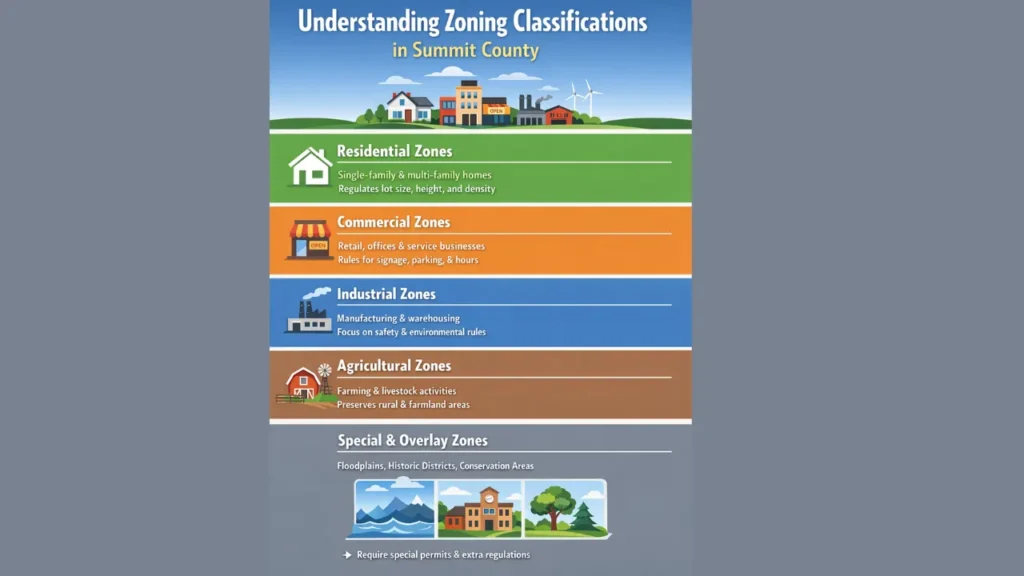
Summit County uses several zoning categories to manage land use. Common classifications include:
Residential Zones
Residential zones are intended for single-family and multi-family housing. Regulations may control lot size, building height, density, and accessory structures.
Commercial Zones
Commercial zoning allows retail businesses, offices, and service uses. These districts often include rules for parking, signage, and hours of operation.
Industrial Zones
Industrial zones support manufacturing, warehousing, and distribution. Regulations focus on safety standards, environmental impact, and buffer requirements.
Agricultural Zones
Agricultural zoning preserves farmland and rural land uses. Farming, livestock, and related activities are typically permitted.
Special Purpose Zones
Overlay districts may apply additional regulations to certain areas, such as flood zones, historic districts, or conservation areas. Special approvals may be required.
How to Use Summit County Zoning Maps
- Identify the property using an address or parcel number
- Locate the zoning district on the official county zoning map
- Review permitted uses for that zoning classification
- Check development standards such as setbacks, height, and density
- Contact county officials for questions about variances or conditional uses
Tip: Confirm zoning details before purchasing property or starting construction.
Using zoning maps properly helps prevent legal violations and supports informed property development decisions.
Summit County Zoning Regulations Explained
Zoning regulations outline the legal requirements for land use, construction, and property modifications in Summit County. These rules help ensure development complies with county planning goals and public safety standards.
Zoning regulations may cover:
- Building and structural standards
- Land use restrictions
- Parking and signage rules
- Variances and conditional use permits
- Environmental and safety considerations
⚠ Important:
Zoning approval does not replace required building permits or inspections.
Tips for Navigating Summit County Zoning
- Always confirm zoning before purchasing property
- Use official county maps for accurate information
- Consult the Summit County Planning & GIS Department for guidance
- Check for updates as zoning regulations may change
- Understand any special permits or conditional requirements
Conclusion
Summit County zoning maps and regulations provide essential guidance for property owners, developers, and residents. By using zoning maps and understanding the county’s rules, you can ensure that land use, construction, and development projects comply with legal requirements and support orderly growth. Whether planning a new home, opening a business, or investing in property, zoning knowledge is key to informed decision-making in Summit County, Ohio.
FAQ’s
Where can I view Summit County zoning maps?
Zoning maps are available online through the Summit County Planning & GIS Department and at the county office.
What does a residential zone allow?
Residential zones permit single-family and multi-family housing with specific regulations for lot size, height, and density.
Can I build a business in a residential zone?
Typically, commercial activities are not allowed in residential zones unless a conditional use permit is obtained.
Do zoning regulations change often?
Zoning regulations can be updated periodically. Always verify with the county for the most current rules.
Who should I contact for questions about zoning permits?
Contact the Summit County Planning & GIS Department for guidance on permits, variances, or conditional uses.