Accessing property records in Summit County can feel overwhelming, especially if it’s your first time navigating government systems. Homeowners, buyers, and real estate professionals all want quick answers about ownership history, deeds, or tax assessments but the process is often confusing. With multiple offices, online portals, and document types, it’s easy to get lost. This guide provides a clear path from start to finish, explaining where to begin, what to request, and how to ensure you receive accurate, official copies. By following these steps, you can avoid wasted time, unnecessary frustration, and potential errors in your property research.
Confusion About Where to Start
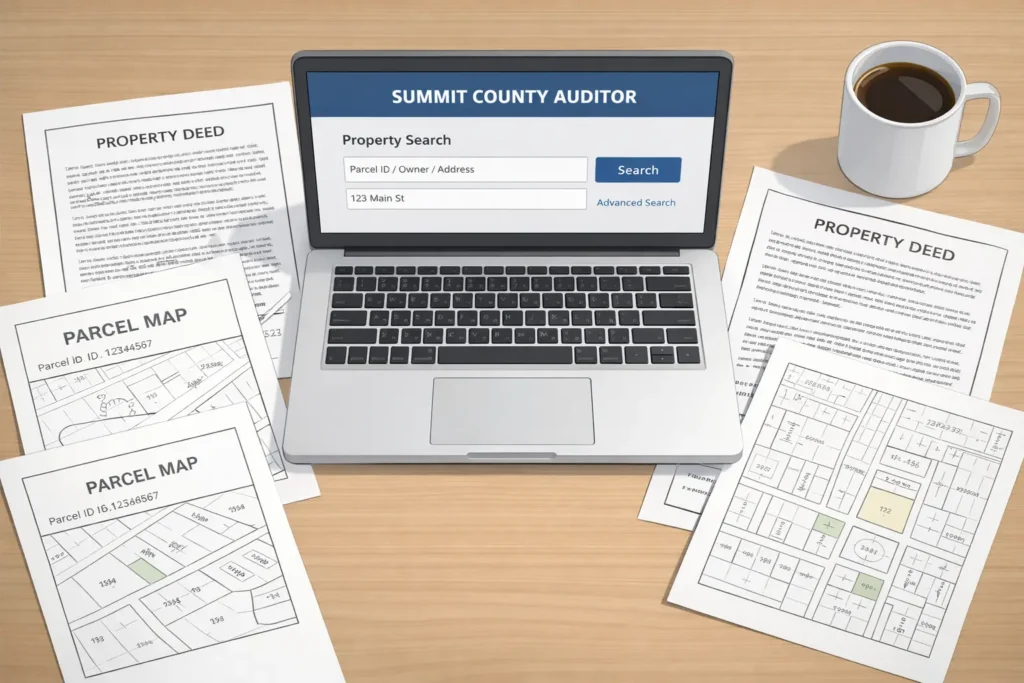
Many people aren’t sure whether they should visit the Summit County Auditor’s office in person, use the online portal, or make a phone call. The official starting point is always the Auditor’s office, as it holds all verified property records for the county, including deeds, tax assessments, and parcel maps. Visiting the Auditor’s website first gives you a clear idea of the types of records available and the process for obtaining copies. For first-time users, knowing which office to approach can prevent half the stress, as the wrong department like the Treasurer or Recorder cannot provide the documents you need.
Difficulty Navigating the Online System
Summit County’s online property portal can feel cluttered at first glance. Multiple search options, tabs, and links can be intimidating. To get the correct records, start by entering the property address or parcel number into the Auditor’s parcel search tool. Once the record appears, you’ll see options for deed images, tax records, and property history. Taking it step by step removes the guesswork.
Pro tip: Always bookmark the parcel search page for repeated use this saves time when researching multiple properties.
Unclear Document Types and Availability
Property records include a variety of documents: deeds, tax assessment notices, plat maps, and historical records. Many homeowners are unsure which document they actually need for their purpose. Deeds prove ownership, tax records show assessed value and payment history, and plat maps display lot boundaries. Understanding the purpose of each type prevents requesting the wrong document.
Example: If you’re contesting a property boundary with a neighbor, requesting the deed alone won’t be enough you’ll also need the official plat map.
Missing or Incomplete Records
Sometimes, older records are incomplete, damaged or not digitized. Users may struggle to find historical copies for properties that have changed hands several times. The Auditor’s office can verify whether a document exists in their archives before you make a formal request. Confirming this ahead of time prevents unnecessary trips and ensures you receive the official version. In some cases, you might need to coordinate with the Summit County Recorder if the document predates digital records or involves transfers handled by other townships.
Fees and Payment Confusion
Homeowners often worry about hidden costs when requesting certified property copies. The Summit County Auditor typically provides standard copies free of charge, while certified or notarized copies may carry a small fee. Payments can usually be made online, by mail, or in person. Knowing this in advance avoids surprises at the counter or on your credit card statement. By checking the fee schedule on the Auditor’s website, you’ll know exactly what to expect and how to prepare, saving both money and time.
Time Delays in Receiving Records
Requesting property copies is rarely instant, especially for official, certified versions. Online requests may take a few business days, while in-person visits can often provide immediate copies if documents are available. Delays can also occur during peak periods or when older records require retrieval from archives.
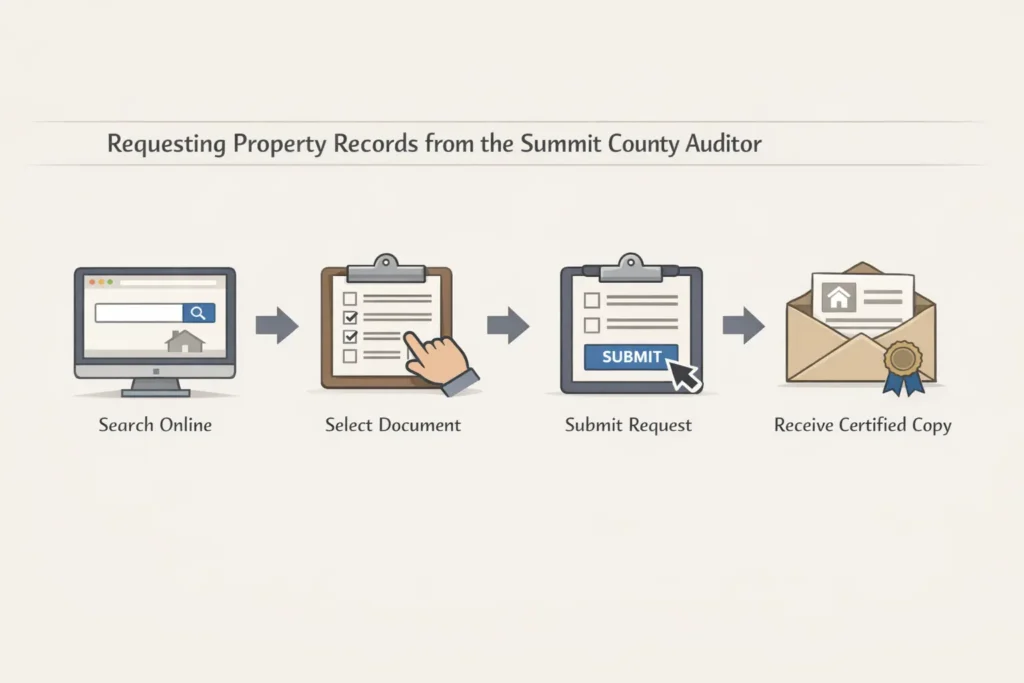
Pro tip: Submit requests early if you need the records for legal, tax, or real estate transactions. Planning ahead ensures your paperwork is ready when needed.
Difficulty Understanding Property Legal Language
Even after obtaining the records, the legal terminology can be confusing. Terms like “fee simple,” “encumbrance,” or “grantor/grantee” can intimidate non-professionals. Understanding these terms is crucial if you are using the documents for property transfers, boundary disputes, or legal matters. The Auditor’s website provides brief explanations, but taking time to read guides on property deeds and tax assessments helps you interpret the documents accurately. When in doubt, a consultation with a title professional can clarify complex sections.
Privacy and Access Concerns
Users often worry about what information is public and what requires authorization. Most property records are public in Summit County, but some sensitive information, like Social Security numbers of owners or certain financial details, is protected. Understanding these privacy limits prevents accidental misuse of data or legal issues. For official purposes, relying on the Auditor’s verified copy ensures you’re accessing legitimate, lawful information without breaching confidentiality.
Errors or Discrepancies in Records
Mistakes in property records like misspelled names, incorrect lot dimensions, or outdated ownership details can create serious problems. The Auditor’s office allows property owners to report errors and request corrections. Knowing how to document the discrepancy and submit evidence expedites resolution.
Example: If your deed shows a previous owner’s name instead of your trust name, bringing both the deed and a notarized affidavit to the Auditor accelerates the correction process.
Multiple Offices and Confusing Jurisdictions
Summit County has several townships and municipalities, and it’s easy to contact the wrong office for specific properties. The Auditor’s office oversees the majority of property records, but some historical documents or plats may fall under township jurisdiction. Clarifying which office is responsible for your property prevents wasted trips or delays. Checking the Auditor’s online directory for township-specific guidance ensures you contact the right department for your request.
Quick Property Record Request Checklist
- Start at the Summit County Auditor website
- Identify the property via address, owner name, or parcel number
- Determine the type of record needed (deed, tax assessment, plat map)
- Verify whether the document is available online or in archives
- Confirm any fees and payment methods
- Submit online or in-person request
- Track request status and estimated retrieval time
- Verify the received document for accuracy
- Contact the Auditor for corrections if needed
Where Each Type of Record Lives
| Document Type | Location / Office | Action Needed |
|---|---|---|
| Property deed | Auditor / Recorder | Request certified copy |
| Tax assessment records | Auditor | Print or download |
| Parcel maps | Auditor | Request or view online |
| Historical ownership | Auditor archives | Submit formal retrieval request |
| Boundary or survey info | Auditor / Recorder | Request supporting documents |
Conclusion
Getting property records from the Summit County Auditor doesn’t have to be confusing or stressful. Starting at the official Auditor’s office or online portal, knowing which documents you need, and understanding fees, timelines, and legal terms simplifies the process. Following a step-by-step approach ensures you receive accurate and official copies for any purpose, whether legal, tax-related, or personal. Planning ahead, using examples, and keeping a checklist makes the task straightforward, avoiding errors, delays, and frustration.
FAQs
Can I request property records online for free?
Yes. Most standard property records are accessible through the Summit County Auditor portal without any cost, though certified copies may have a small fee.
Do I need the owner’s name to get a record?
No. Searching by address or parcel number is usually sufficient to locate and request the document
How long does it take to receive a certified copy?
Processing times vary; online or in-person requests for archived records may take several business days.
Can I correct mistakes on my property records?
Yes. Submit evidence and a correction request to the Auditor’s office for verification and updates.
Are older property records available digitally?
Some are digitized, but very old deeds or maps may require a formal in-person request from archives.
What types of property records can I request?
Deeds, tax assessments, parcel maps, historical ownership records, and supporting documents like surveys are available depending on the property.