Property records are meant to bring clarity, but for many Summit County homeowners, buyers, and taxpayers, they often create confusion instead. A value looks wrong, a name doesn’t match, or a tax number feels alarming and stress kicks in fast. Summit County property records include ownership information, parcel numbers, property values, tax assessments, and legal documents maintained by several county offices. These records help homeowners, buyers, and taxpayers verify property details and understand how their taxes are calculated.
This independent guide explains how Summit County property records work, why common misunderstandings happen, and how to fix issues correctly using official county resources. Most problems are not legal emergencies. They are usually simple record errors or misinterpretations that can be corrected once you know where to look and which office handles what.
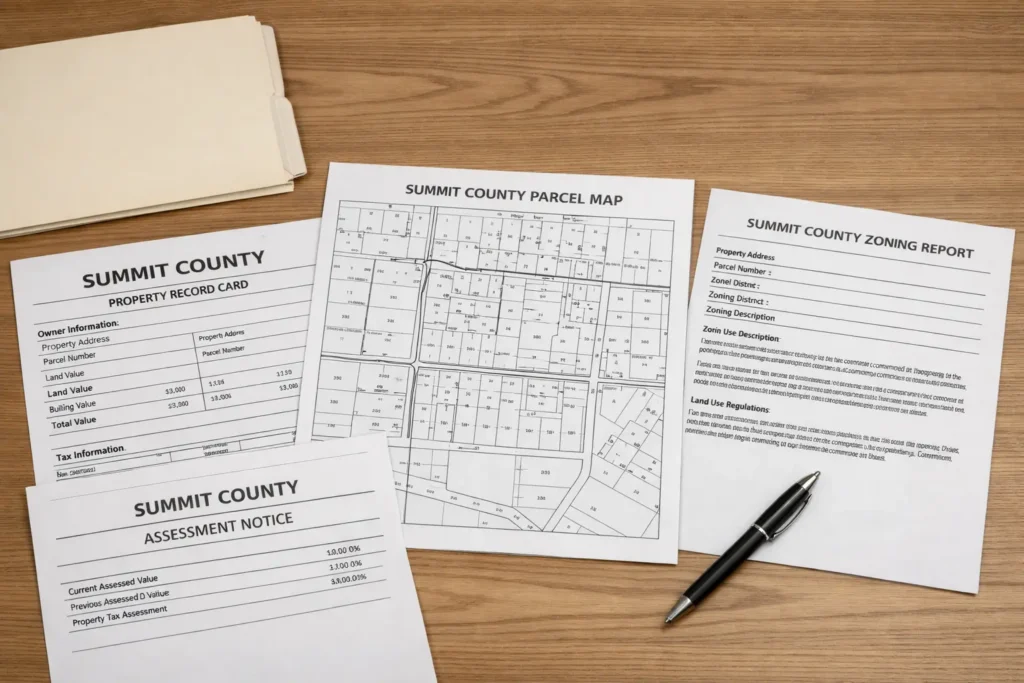
Below are the 10 most common mistakes people make when reviewing Summit County property records, explained in plain English, along with practical steps to avoid them.
Where to Check Summit County Property Records
Property records in Summit County are maintained by several government offices, and each office manages different types of information.
Homeowners and buyers can review records through official county tools such as:
• the Summit County property search database
• the GIS parcel map viewer
• property tax records from the county treasurer
• recorded deeds from the county recorder
Checking the correct source helps avoid confusion because property value, tax billing, and ownership documents are handled by different departments.
1. Looking at the Wrong Office for the Wrong Information
One common mistake is assuming all property information comes from a single place. In Summit County, different offices handle different parts of property data. According to the official county structure, the Summit County Auditor property records office handles property valuation and assessment details.
The Treasurer manages tax bills, payments, and delinquencies. The Recorder maintains legal ownership documents such as deeds and transfers.When information from these offices is mixed together incorrectly, it can appear as if something is wrong when it is not. This guide helps you understand which office to reference so records make sense when reviewed properly.
2. Searching by the Wrong Owner Name
Many people search for their own name and find nothing, then assume the record is missing. In reality, the property may be listed under a trust, an LLC, a deceased owner, or a spouse. Summit County Auditor records reflect the legal deed holder, not necessarily the person living there.
If the property was inherited, transferred into a trust, or purchased through a business, the name will differ. The solution is search using multiple methods including parcel number or address through the Summit County property search tool. Owner-name searches work best when you understand how the deed is actually recorded.
Example:
A home owned by “Smith Family Trust” will not appear under “John Smith,” even if he lives there.
Each property in Summit County is also assigned a parcel number, which acts as a unique identifier in the county’s property database. Searching by parcel number often provides the most accurate results because it connects directly to the official property record.
3. Assuming Market Value Equals Taxable Value
A very common panic moment happens when users see a high market value and assume they are being overtaxed. Market value, assessed value, and taxable value are not the same thing. The Summit County Auditor estimates market value for assessment purposes. The assessed value is typically a percentage of that number, and taxable value is often reduced further by exemptions. Taxes are calculated using the taxable value, not the market value alone.
In Ohio, property taxes are calculated using an assessment system where the county estimates market value, applies an assessment percentage, and then multiplies the taxable value by local tax rates. Understanding this process helps homeowners interpret property records more accurately When people compare Zillow prices to county assessments, confusion grows. Understanding these layers helps homeowners read records calmly and accurately.
4. Ignoring Property Classification Errors
Property classification has a direct impact on taxes and eligibility for reductions. A property incorrectly marked as commercial or non-owner-occupied may lose valuable tax benefits.
county assessment records show classification clearly, but many homeowners never check it. Errors often happen after ownership transfers, rentals, or data updates. If your home is your primary residence, it should be classified as residential and owner-occupied where applicable. Fixing classification errors can lead to real tax relief, but only if you catch them early and report them properly.
5. Missing Homestead or Reduction Status
Many homeowners qualify for the homestead exemption or other reductions but assume they are automatic forever. They are not. Changes in ownership, missed renewal steps, or classification updates can remove reductions without warning.
Summit County Auditor records clearly show whether a homestead or reduction is applied, but users often overlook this section. Checking this status annually prevents unpleasant surprises. If a reduction is missing, it can usually be reapplied with proper documentation. This is one of the easiest mistakes to fix, yet one of the most expensive to ignore.
Pro Tip:
Always review your reduction status right after receiving a new tax bill or after any ownership change.
6. Not Updating Property After Renovations or Damage
Property records must reflect reality, but that only happens when updates are properly recorded. Major renovations, additions, or structural changes can affect assessed value. Likewise, damage from fire, flooding, or storms may justify reassessment.
Some homeowners assume updates happen automatically, which is not always true. county property database depend on inspections, permits, and reported changes. Failing to update records can result in incorrect valuations for years. Knowing when to report changes protects both overpayment and future disputes.
7. Misreading Land Value vs Building Values
Auditor records separate land value and improvement value, and many users do not understand why. Land value represents the parcel itself, while improvement value reflects structures like homes or garages. These numbers combine to form total property value.
Land value can rise even if the house remains unchanged due to neighborhood development or zoning changes. Users often panic when land value increases without visible changes. Understanding this breakdown prevents misinterpretation and unnecessary appeals. Both components matter, but they serve different purposes in valuation.
Ohio counties periodically update property values through reappraisal and update cycles. During these reassessments, land values may change based on neighborhood development, zoning updates, or market trends even if the structure itself remains unchanged.
8. Using Third-Party Property Websites as “Official”
Zillow, Realtor.com, and similar platforms are useful for browsing, but they are not official records. They rely on delayed feeds, estimates, and third-party data sources.county valuation records are the legal authority for valuation and ownership.
When numbers do not match, users often blame the county instead of the website. The county database reflects recorded deeds and assessed values, even for off-market or non-MLS transactions. For legal, tax, or appeal purposes, only county records should be trusted.
9. Missing Deadlines for Corrections or Appeals
Many people notice errors but wait too long to act. Summit County has specific deadlines for valuation appeals through the Board of Revision. Informal corrections may be possible at any time, but formal appeals are time-sensitive. Missing a deadline does not mean you are powerless, but it limits your options. Understanding the difference between correcting a factual error and disputing value is critical. Acting early keeps solutions simple and stress levels low.
Important
The Summit County Board of Revision accepts valuation appeals only within specific filing periods each year. Missing the filing window may require waiting until the next appeal cycle.
10. Not Knowing How to Fix Errors Properly
Seeing an error is only half the battle. Knowing the next step is where most people get stuck. Some issues require contacting the Auditor directly, while others involve documentation, inspections, or appeals. Summit County Auditor corrections typically require proof such as deeds, surveys, or photographs. Knowing what documents are needed prevents delays. A structured approach saves weeks of back-and-forth and ensures records are corrected accurately and permanently.
How Summit County Property Records Are Managed
- Property information in Summit County is managed by multiple government offices that work together to maintain accurate public records.
The County Auditor determines property values and maintains the official assessment database. - The County Treasurer manages tax bills, payments, and delinquent tax records.
- The County Recorder maintains legal documents such as deeds, transfers, and ownership filings.
- When property owners dispute assessed value, appeals are handled through the Board of Revision, which reviews valuation evidence and determines whether adjustments are appropriate.
Understanding which office manages each type of record helps property owners resolve issues more quickly.
How to Fix Errors in Summit County Property Records
1 Review the property record using the county database
2 Confirm ownership details, parcel number, and classification
3 Identify whether the issue relates to value, taxes, or ownership
4 Contact the correct county office for correction
5 Gather documents such as deeds, surveys, or photographs if required
Quick Checklist: Fixing Summit County Auditor Record Errors
- Confirm which office handles your issue
- Search using address, parcel number, and owner name
- Verify classification and reduction status
- Review land vs building values
- Compare county records, not third-party sites
- Gather supporting documents
- Contact the Summit County Auditor
- Track deadlines for appeals
- Follow up until records update
Where to Check and Fix Common Property Record Issues
| Issue Type | Office That Handles This | Action Needed |
|---|---|---|
| Property value concerns | Auditor | Review assessment |
| Tax bill or payment status | Treasurer | Check payment records |
| Ownership or deed errors | Recorder | Verify legal documents |
| Classification mistakes | Auditor | Request correction |
| Missing homestead reduction | Auditor | Reapply with proof |
| Appeal of assessed value | Board of Revision | File before deadline |
Conclusion
Most issues found in Summit County property records are not serious problems. They are usually misunderstandings, outdated details, or missed steps. Once you understand how the county offices work together, reviewing records becomes far less stressful.
This independent guide is designed to help homeowners and buyers read property records accurately, recognize common mistakes, and know when to use official county resources for corrections. Regular reviews and early action can prevent confusion and protect your property information over time.
FAQs
Why doesn’t my property record match my tax bill?
Because property value is handled by the Auditor, while billing and payments are managed by the Treasurer.
Can I fix errors without filing an appeal?
Yes, factual errors can often be corrected informally through the Auditor.
Do third-party property sites override county records?
No, county records are the legal authority for property data.
How often should I review my property record?
At least once a year or after ownership or structural changes.
Does correcting records reduce taxes immediately?
Not always, but corrections affect future assessments and bills.
Where do I start if I see a mistake?
Begin with the Summit County Auditor’s office for guidance.