Filing a property value complaint in Summit County can feel intimidating, especially if you recently bought a house or noticed your neighbor’s home sold for much less. Many homeowners notice their tax bill is much higher than similar homes nearby. The tax bill seems too high, the market value looks unrealistic, or nearby homes sold for much less. Unfortunately, Without guidance, even first-time homeowners are unsure if they can appeal. This guide exists to remove that confusion and give you a clear, realistic path forward.
A property value complaint is not about avoiding taxes or gaming the system. For instance, Jane in Akron filed a complaint after her neighbor’s house sold for much less It is a legal right given to property owners to ensure their assessed value reflects real market conditions. When values are incorrect, taxes become unfair. Knowing the process beforehand saves time and frustration
Tip
Before filing a complaint, check your property’s current assessed value and parcel information on the Summit County property records system.
Even recent buyers or heirs can often file if they owned the property on the tax lien date?
One of the biggest mental roadblocks is not knowing whether you are allowed to file at all. Many people assume only long-term homeowners qualify, while others think recent buyers are disqualified automatically. In Summit County, eligibility is broader than most people expect. If you own real property in Summit County, you generally have the right to file a complaint regarding its assessed value.
Residential homeowners, landlords, commercial property owners, and even heirs who recently inherited property may qualify. Recent buyers often believe their purchase price locks in the value, but that is not always true. If market conditions shifted, or if the assessment does not reflect the true condition of the property, a complaint may still be valid. The key requirement is legal ownership during the tax lien date for the year being appealed.
Example: A homeowner who purchased a house last year may still file if the assessed value is significantly higher than similar nearby sales or ignores structural issues that existed at purchase.
Where Exactly Do You File This in Summit County?
Summit County has multiple offices involved in property taxation, which is why people often file in the wrong place.valuation dispute are not handled by the Auditor or the Treasurer directly. They are handled by the Summit County Board of Revision, which is the only authority that can hear and decide valuation disputes.
The Board of Revision operates under the Summit County Fiscal Office, but it functions independently. Complaints can usually be filed online, by mail, or in person, depending on the year and filing system in use. Filing with the wrong office does not protect your deadline, so knowing the correct authority from the start is critical.
Submitting your complaint to the Board of Revision officially opens the appeal process. Until that happens, no review of your property value will occur, regardless of how many calls or emails you make to other offices.
What Is the Deadline and What Happens If You Miss It?
Deadlines are where most appeals fail before they even begin. Summit County property assessment appeal must be filed by a specific annual deadline, usually tied to Ohio’s valuation board filing calendar. Missing this deadline almost always means losing your right to appeal for that tax year.
Once the deadline passes, the Board of Revision generally cannot accept late complaints, even if the valuation is clearly wrong. Exceptions are extremely rare and typically involve legal errors or extraordinary circumstances. Filing early is always safer than waiting until the last week, especially if technical issues arise with online submission.
Missing the deadline does not permanently bar you from appealing, but it does mean waiting until the next eligible tax year. For homeowners facing immediate tax increases, that delay can be costly.
Which Form Do You Need and How Do You Fill It Correctly?
Summit County uses the Ohio Board of Revision Complaint Form, which often intimidates first-time filers. The form looks legal and rigid, but most sections are straightforward once you understand what they are asking. The biggest mistakes happen when people rush through ownership details, valuation amounts, or grounds for complaint.
You must clearly state the current assessed value and the value you believe is correct. Guessing or choosing a random lower number weakens your case. Your proposed value should be tied to evidence, such as comparable sales or property condition issues. Incomplete forms, missing signatures, or vague explanations are common reasons complaints get dismissed without a hearing.
Pro Tip: Before submitting the form, review your property record on the Summit County Auditor’s website to ensure ownership names, parcel numbers, and classifications match exactly.
What Proof Do You Need to Actually Win the Complaint?
Filing a complaint does not automatically reduce your property value. Evidence is what determines the outcome. Strong evidence shows that the assessed value does not reflect fair market value as of the tax lien date. Weak evidence relies on opinions, emotions, or unrelated market trends.
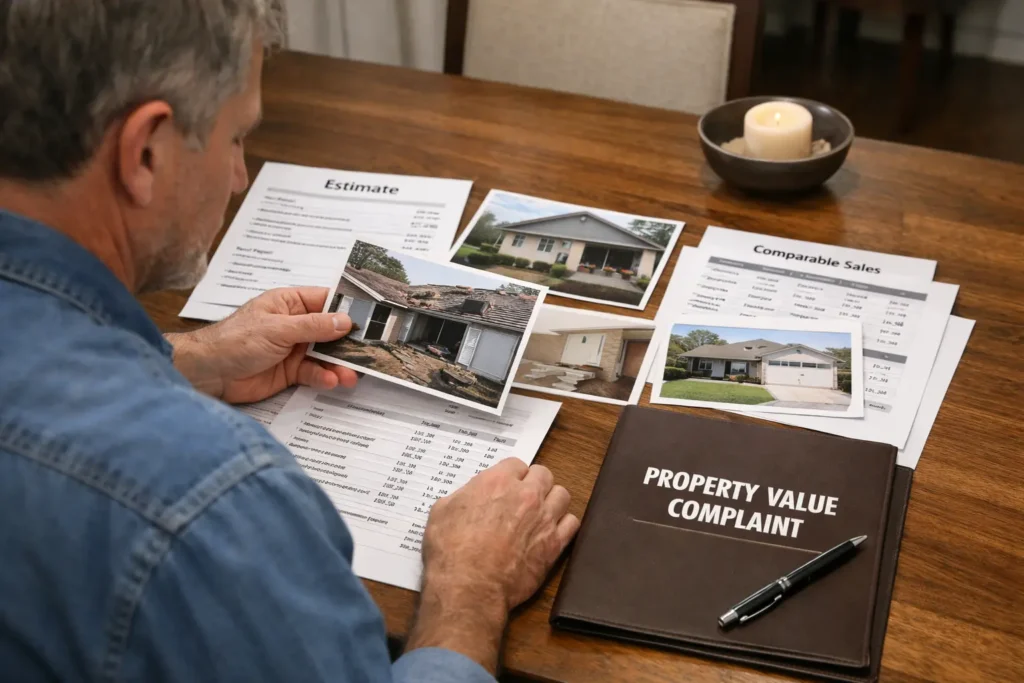
Comparable sales are one of the most effective forms of proof. These are recent sales of similar properties in your area that sold for less than your assessed value. Photos documenting structural damage, outdated systems, or condition problems can also strengthen your case. Appraisals are powerful but optional, and they come with added cost.
The Board of Revision looks for objective information. Personal financial hardship or high tax bills alone do not influence valuation decisions. For instance, submitting photos of outdated wiring or roof damage is much more persuasive than explaining your personal budget

How Much Will This Cost Me?
One of the few pieces of good news is that filing an appeal in Summit County is generally free. There is no filing fee charged by the Board of Revision. This makes the process accessible to homeowners who want to try without financial risk.
However, optional costs may arise if you choose to strengthen your case. Hiring an appraiser, consulting an attorney, or obtaining detailed market reports can add expense. These costs are not required, and many homeowners successfully file on their own using publicly available data.Understanding that the appeal itself is free helps reduce fear and encourages more people to challenge incorrect assessments when necessary.
Do I Need a Lawyer or Can I Do This Myself?
Many people assume a lawyer is required because the process sounds legal. In reality, most residential property owners file complaints on their own. The Board of Revision is designed to hear cases from regular property owners, not just professionals.
Self-filing makes sense when the property is residential, the value difference is reasonable, and evidence is straightforward. Legal help may be worth considering for complex commercial properties, large valuation disputes, or cases involving prior appeals and litigation. The decision depends more on complexity than fear.Confidence often comes from preparation, not representation.
What Happens After I File the Complaint?
After filing, your complaint enters a review queue with the local review board. You may receive a hearing notice, especially if the case requires discussion or evidence presentation. Some cases are resolved based on submitted documentation alone, while others require a formal hearing.
Hearings are typically informal but structured. You may be asked to explain your valuation and present evidence. Decisions are issued after review, and if a value change is approved, it is reflected in future tax calculations rather than immediate refunds. Patience is necessary, as decisions can take weeks or months depending on volume and complexity.
What If I Lose the Complaint?
Losing a complaint does not mean the end of the road. If you disagree with the Board of Revision’s decision, Ohio law allows further appeals, including to the Court of Common Pleas. These options involve stricter rules and potential legal costs, so they should be considered carefully.
In some cases, it may be more practical to wait for the next valuation cycle and file again with stronger evidence. Understanding why a complaint failed can help you prepare better next time.Loss does not equal failure. It equals information.
Is It Even Worth the Effort?
Whether filing is worth it depends on the size of the valuation gap and your willingness to gather evidence. Many successful appeals result in meaningful tax savings over multiple years. Others result in no change, but with minimal cost beyond time.
When assessments clearly exceed market reality, filing is often worth the effort. When differences are small or evidence is weak, expectations should be realistic. The process exists to correct errors, not guarantee reductions.
Example: Homeowners in neighborhoods with declining sale prices often see better outcomes than those appealing during rising markets.
Quick Checklist: Before You File a Property Value Complaint
- Confirm you are the legal property owner for the tax year being appealed.
- Verify your current assessed value using the Summit County Auditor website.
- Check the Board of Revision filing deadline for the current year.
- Download and review the correct Ohio Board of Revision complaint form.
- Decide on a realistic proposed value backed by market evidence.
- Gather comparable sales, photos, or appraisal documents.
- Double-check parcel number, ownership name, and signatures before submitting.
If all boxes are checked, you are ready to file without guessing.
Tip Saving comparable sale screenshots and repair estimates before filing can make preparing your complaint much easier.
Evidence That Helps Win a Summit County Property Value Complaint
| Evidence Type | Strength Level | Why It Helps | Common Mistake |
|---|---|---|---|
| Recent comparable home sales | Strong | Shows real market value near the tax lien date | Using sales too old or outside the neighborhood |
| Professional appraisal | Very strong | Independent, detailed valuation report | Appraisal dated after the lien year |
| Photos of property condition | Moderate | Supports lower value due to damage or wear | Submitting unclear or unrelated photos |
| Repair estimates | Moderate | Proves deferred maintenance affects value | No link between repairs and value impact |
| Online home estimates only | Weak | Not considered reliable evidence alone | Relying on Zillow-style numbers |
NOTE: Online property estimates such as Zillow are generally not considered strong evidence by the Board of Revision.
Conclusion
Filing a property value complaint in Summit County is less about legal complexity and more about understanding the system. Once you know who can file, where to file, and how to support your claim with evidence, the process becomes manageable. The biggest mistakes come from missed deadlines, weak proof, or filing with the wrong office.
If your property’s assessed value does not reflect reality, the Board of Revision process gives you a legitimate way to challenge it. With preparation, patience, and realistic expectations, many homeowners successfully correct unfair valuations and reduce long-term tax burden
FAQs
Can I file a property value complaint every year?
Yes, but only during eligible filing periods. Some restrictions apply after recent sales.
Is filing a complaint risky if my value might go up?
In residential cases, increases are rare, but the Board can review the full valuation.
How long does the Board of Revision take to decide?
Most decisions take several weeks to a few months, depending on case volume.
Will my taxes drop immediately after approval?
No. Approved changes affect future tax bills, not past payments.
Do I need to attend a hearing?
Not always. Some cases are decided based on submitted evidence alone.
Can I withdraw my complaint after filing?
Yes, withdrawals are usually allowed before a final decision is issued.
What evidence is strongest for a property tax appeal?
The strongest evidence is recent comparable home sales from the same neighborhood around the tax lien date. Professional appraisals and documented structural issues can also strengthen a property value complaint.